



The professional services market is undergoing significant global structural change, driven by a surge in M&A activity and private equity investment. In accountancy, moves such as New Mountain Capital’s acquisition of Grant Thornton US, Blackstone’s purchase of Citrin Cooperman, and Hellman & Friedman backing Baker Tilly’s merger with Moss Adams point to a level of consolidation that goes well beyond typical dealmaking. At the same time, firms like RSM are strengthening integration between their US and UK operations, signalling a shift towards more unified, globally aligned firms.
This momentum is now clearly mirrored in the legal sector. A series of major tie-ups – including McDermott Will & Emery with Schulte, Hogan Lovells with Cadwalader, Winston & Strawn with Taylor Wessing, and Perkins Coie with Ashurst – suggest law firms are following a similar path of scale, integration, and international alignment.
Further reinforcing this trend, DLA Piper has just announced the proposed dissolution of its verein structure, as one of the world’s largest law firms looks to unify its global strategy and unlock the next phase of growth.
For marketing and business development leaders, these structural shifts are creating both pressure and opportunity: pressure to deliver unified go-to-market strategies across newly merged entities, and opportunity to create commercial functions that can drive meaningful competitive differentiation.
What we’re observing across the sector, especially in North America, is a reconfiguration of how firms organize, position, and commercialize themselves in a market defined by geopolitical volatility, technological acceleration, and rising client expectations.
In this article, we outline six market shifts that are redefining what it takes to stand out in this competitive marketplace.
From International Footprints to Integrated Global Platforms
The first shift is the move to genuine global integration of BD, Marketing and Client Experience teams.
Transatlantic mergers, cross-border combinations, and multi-jurisdictional client mandates are pushing firms to rethink how they deliver services across regions. A global brand is no longer enough – firms must operate as unified client service platforms.
This is most evident in the integration of marketing, business development, and communications across geographies. Leadership mandates are increasingly multi-regional, and firms are adopting a more borderless approach to hiring. Senior MBD leadership roles are no longer tied to a single headquarters or city; instead, firms are recognizing that top talent can be based across any of their major US or international offices.
Gone are the days of defaulting to New York as the centre of gravity. Today’s leading firms are building distributed leadership teams, placing CMOs and senior executives in key global hubs. In turn, Chief Marketing and Business Development Officers are leveraging this global talent pool to create more balanced, effective leadership structures across Director level.
Firms are prioritizing leaders who can orchestrate cohesive go-to-market, BD and Client Development strategies across complex, multi-location organisations.
Building Commercial Expertise Within Practice Groups and Service Lines
Alongside global integration, firms are continuing to invest heavily in best-in-class business development and marketing capabilities at the practice group and service line level. The most significant investment has been concentrated in corporate practice and litigation for law firms, with parallel focus on tax and transaction advisory capabilities in accountancy and consultancy.
Business development is increasingly seen as a strategic lever embedded within practice strategy. Firms expect their BD leaders to bring subject matter fluency, engage credibly with partners on market positioning, and play an active role in shaping client revenue strategy. This continued investment has created opportunity and accountability for BD leaders to drive much greater commercial impact and to become true business partners to their leadership teams.
The requirement for practice specialization – and the premium placed on candidates with pre-existing experience and domain knowledge – has created a supply and demand challenge in the talent market. Deep practice-aligned commercial expertise is scarce. Hiring timelines are extending, and candidates are being well retained through continued salary inflation, counter offers, and sign-on bonuses.
Commercial depth at the practice level is now a core determinant of performance. Firms that fail to invest here risk falling behind competitors who are embedding growth capability directly into the engine room of service delivery.
Brand Investment: Joining the Dots Between Brand and Demand
Brand is increasingly front of mind for leadership, with several global firms undertaking significant repositioning exercises over the past 12-18 months. PwC and Freshfields have launched brand refreshes, revisiting purpose, narrative, and market positioning in response to heightened competition and market volatility. In uncertain markets, trust and clarity of identity have become critical assets.
However, with this increased investment comes increased scrutiny. Brand is no longer protected from commercial accountability. Boards are asking more sophisticated questions about the relationship between brand equity and pipeline performance. Marketing leaders are being challenged to connect narrative positioning with measurable demand generation outcomes.
The era of brand as a standalone communications exercise has passed. It now sits firmly within the growth system and is being utilized to manage reputation on a global scale, generate interest, and stay future-fit in a volatile market.
For the C-Suite, this requires tighter integration between brand strategy, digital performance, business development, and revenue reporting.
A Renewed Commitment to Client and Sector Strategy
Alongside the continued investment in practice and service line BD specialisms, firms are driving much greater client-centricity in their go-to-market strategies by investing in client programs and sector-led initiatives.
We’re seeing firms reinvest in key account management programs, appoint client-facing commercial leaders, and strengthen the data infrastructure that underpins account planning. In parallel, there’s growing emphasis on sector-led growth. Rather than organizing purely around technical expertise (corporate law, audit, tax), firms are aligning around industry opportunity, appointing Heads of Sector BD and embedding industry insight into their go-to-market activity.
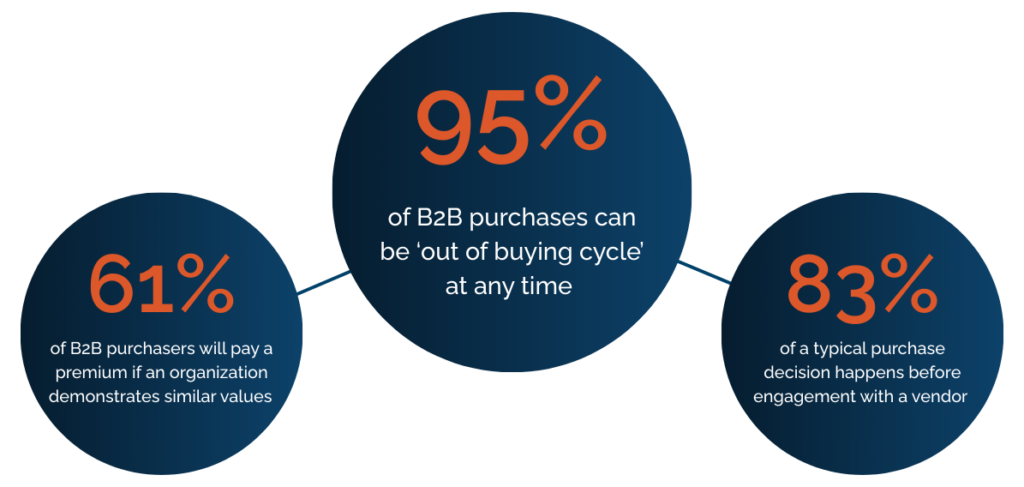
This reflects a broader shift in client expectations. Buyers are seeking advisors who understand their commercial ecosystem, not just their technical challenge. Clients value integrated solutions rather than fragmented, disjointed conversations. They look to trusted advisors who understand their industry dynamics and can deliver cohesive, strategic direction.
AI: Building Brands for Two Brains
Technology investment is accelerating across the sector, particularly in AI, marketing operations, and data infrastructure.
Internally, firms are modernizing tech stacks to drive productivity, insight generation, and efficiency. Externally, they’re rethinking how digital presence influences market perception and competitive visibility.
A subtle but significant evolution is underway: AI systems are becoming part of the audience. Firms have spent years crafting their messaging and content to speak the language of their clients, but now they must also speak the language of AI.
Firms are recognizing that their visibility across structured digital platforms, authoritative content ecosystems, and data-rich environments influences how they are surfaced, referenced, and recommended. Generative Engine Optimization (GEO) is moving to the forefront of performance marketing as potential buyers increasingly turn to AI to shortlist service providers.
In practical terms, this means re-evaluating digital and brand strategy beyond traditional channels. Optimization for professional networks, knowledge platforms, news sources and structured information environments is increasingly part of competitive positioning.
As AI is also harnessed to increase speed of and scope of content creation, acting as a powerful co-creator in the brand building process, it has inherent limitations when it comes to originality. Large language models draw from existing information, which means their outputs are, by definition, derivative. The truly differentiated ideas, the brand positions that cut through and create genuine competitive separation, will continue to require human creativity, fresh thinking, and the kind of original insight that comes from deep industry expertise and strategic intuition.
The firms that will win are those that harness AI for efficiency and reach while preserving the human capital necessary for authentic differentiation. The leadership challenge is twofold: ensuring internal AI adoption drives measurable performance gains, while also adapting brand and digital strategy to a world where both humans and machines shape discovery without sacrificing the originality that only human expertise can provide.
Organizational Design and the Rise of Change Intelligence
Underpinning all of these shifts is organisational complexity.
Firms are managing five generations in the workforce, recalibrating hybrid models and rethinking agency and outsourcing partnerships. Technology-enabled delivery models are reshaping marketing production and execution.
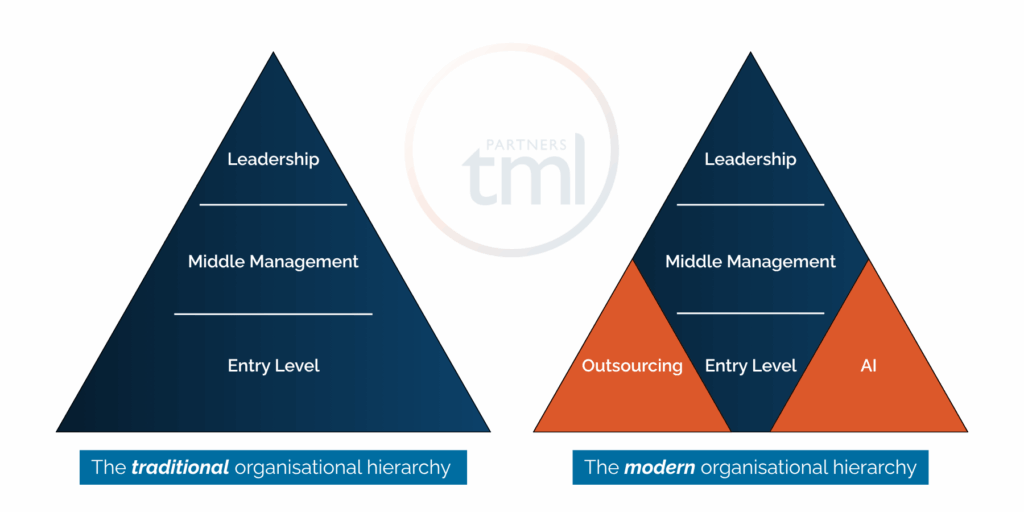
In terms of organizational structure, we are moving away from the classic hierarchical pyramid model towards a kite or diamond model. In this new structure, a concentrated mass of experienced employees, especially at the middle management level, are supported by AI and strategic outsourcing, creating a potential failure to cultivate the growth of tomorrow’s leaders.
Equally, across senior appointments, we see a growing premium placed on what might be described as “change intelligence”: the ability to lead transformation through difficult periods without destabilising culture; to align stakeholders across regions; to adapt quickly without sacrificing clarity of direction.
For executive leaders, the differentiator is not simply securing capable operators, but appointing individuals equipped to navigate sustained organisational change.
Our team were delighted to partner with the leadership team at Ropes & Gray to source key talent for their Business Development function across New York and Washington.
Read the case study
Our team were delighted to partner with Brooks Law to support the strategic appointment of a new Chief Marketing Officer.
Read the case studyFind the difference only a specialist can see
At tml Partners, we support firms across the Professional Services ecosystem by providing access to highly skilled and accomplished talent within marketing, business development, commercial, product, revenue and corporate communications.
If you’re interested in learning more about what we’re seeing in the market, or would like to arrange a confidential discussion regarding your team’s hiring needs, please feel free to get in touch.